Is Mirin Halal? A Practical Guide for Muslims in Japan and Beyond (2026)
Mirin (sweet rice wine) contains 10-14% alcohol and is used in nearly every Japanese sauce. Most schools rule it haram as an ingredient regardless of cooking. This guide covers the four-madhab positions (with cited fatwas), how to identify mirin in Japanese product labels (みりん, 本みりん, 味醂, 料理酒), halal alternatives, and how AI scanner apps detect mirin.
Posted by
Related reading
Halal Food in the United States: 2026 Guide for Residents and Travelers
How Muslims in the US shop and eat halal in 2026. IFANCA, HMS, and IFANCC certification marks, halal availability at Walmart, Costco, Whole Foods, Trader Joe's, Kroger, HEB, Wegmans, ingredient pitfalls in mainstream packaged food, and city-by-city halal hubs in Dearborn, NYC, Houston, Chicago, the Bay Area, and DMV.
Halal Food in the UK: 2026 Guide for Residents and Travelers
How Muslims find halal food across the UK in 2026. The HMC vs HFA debate, halal ranges at Tesco, Sainsbury's, Asda, Morrisons, M&S, Waitrose, Aldi, and Lidl, hidden non-halal traps in sweets and ready meals, regional concentration in London, Birmingham, Leicester, Manchester, and Bradford, and which scanner apps work best in the UK.
Halal Food in Canada: 2026 Guide for Residents and Travelers
How Muslims in Canada find halal food in 2026. HMA, ISNA Canada, and IFANCC certification, halal availability at Loblaws, Sobeys, Metro, Walmart Canada, Costco, and No Frills, GTA halal hubs, Quebec considerations, and which scanner apps work for Canadian barcodes and ingredient lists.
Mirin (Japanese sweet rice wine) contains 10 to 14 percent alcohol from intentional fermentation. The mainstream Sunni position across the Hanafi, Shafi'i, Maliki, and Hanbali schools is that mirin is haram because it is added as an alcoholic ingredient, regardless of how much cooks off. A minority view from Muhammadiyah in Indonesia permits mirin in cooking when the alcohol fully evaporates. Practically, mirin is used in almost every Japanese sauce, marinade, glaze, and even in standard sushi rice vinegar, which means most cooked Japanese food in non-halal-certified restaurants contains it. The reliable approach is to look for halal-certified Japanese restaurants, scan packaged products for mirin (みりん, 本みりん, 料理酒) on the label, and use halal alternatives at home.
Mirin is the single most common reason that Japanese food comes back as mushbooh or haram in halal scanner apps. This guide covers what mirin is, the fatwa positions of the four major Sunni schools (with cited rulings from Darul Iftaa New York, IslamQA Hanafi, MuslimSG, and LPPOM MUI), how to identify mirin on Japanese product labels, halal cooking alternatives, and how AI scanner apps detect it.
What Is Mirin?
Mirin (味醂, みりん) is a Japanese sweet rice wine made by fermenting steamed glutinous rice with kôji mold and shochu (a distilled spirit). The fermentation process produces an amber-colored, syrupy liquid with around 14 percent alcohol by volume and a high sugar content from rice starch breakdown. It has been used in Japanese cooking since the Edo period (1603-1868), originally as a sweet beverage, now almost exclusively as a cooking seasoning.
Mirin's cooking purpose is to add umami, sweetness, and shine to glazes (teriyaki), to balance saltiness in soy-sauce based dishes, and to soften the smell of fish. It is a core seasoning alongside soy sauce, sake, and dashi in the so-called "mother sauces" of Japanese cuisine.
Three commercial categories exist:
- Hon-mirin (本みりん, "true mirin"). Around 14 percent alcohol. Classified in Japan as an alcoholic beverage and taxed accordingly.
- Shio-mirin (塩みりん, "salt mirin"). Around 1.5 percent alcohol with added salt to disqualify it from alcohol tax. Still alcohol-containing.
- Mirin-fu chômi-ryô (みりん風調味料, "mirin-style seasoning"). Often under 1 percent or alcohol-free. Made by mixing corn syrup, glucose, and rice flavoring without fermentation.
The Four-Madhab Position on Mirin
Hanafi position
The dominant Hanafi position, as published by Darul Iftaa New York and Darul Iftaa Chicago, is that mirin is haram. The reasoning: mirin is intentionally fermented to produce alcohol and is added as an ingredient. The Hanafi school distinguishes between khamr (grape-based wine) and other alcoholic substances but the dominant contemporary ruling treats fermentation alcohol added as an ingredient as impermissible regardless. Some early Hanafi rulings allowed non-grape alcohol in trace medicinal amounts, but this is not the position applied to food in mainstream contemporary Hanafi fatwa.
Shafi'i, Maliki, and Hanbali positions
All three schools rule that any intoxicating substance is haram regardless of source, quantity, or whether the beverage form is consumed. Mirin's 10-14 percent alcohol content from intentional fermentation places it squarely in this category. There is no significant disagreement.
Muhammadiyah (Indonesia) minority position
Muhammadiyah's Majelis Tarjih in 2024 issued a fatwa permitting Muslims in Japan to use mirin as a cooking ingredient when the alcohol fully evaporates during the heating process, on the grounds that the resulting dish is no longer intoxicating. This is a contextual minority ruling specifically addressed to Muslims living in Japan facing practical food-availability constraints.
Most major fatwa bodies (LPPOM MUI Indonesia, Darul Iftaa New York, IslamQA Hanafi, MuslimSG Singapore) maintain the haram position. The Muhammadiyah ruling is a minority but published view; Muslims who follow it should be aware they are taking a minority position, and that the mirin question has been the subject of multiple back-and-forth fatwas in Indonesia.
Does Cooking Remove the Alcohol?
A common claim is that cooking eliminates the alcohol in mirin. The data does not support this. United States Department of Agriculture (USDA) studies on alcohol retention in cooking show:
- Alcohol added to a boiling liquid then removed from heat: about 85 percent of alcohol retained.
- Flamed dish: about 75 percent retained.
- Stirred into a sauce and simmered for 15 minutes: about 40 percent retained.
- Simmered for 1 hour: about 25 percent retained.
- Simmered for 2.5 hours: about 5 percent retained.
Almost all Japanese dishes that use mirin are stir-fried, quickly braised, or used in glazes brushed on at the end of cooking. None of these reach the long-simmer threshold that would meaningfully reduce alcohol content. From a halal perspective, the residual alcohol content is also a separate question from the ingredient question: most schools rule that adding alcohol as an ingredient at all makes the dish impermissible.
How to Identify Mirin in Products
On Japanese product labels, watch for these terms:
| Japanese | Romaji | Meaning | Halal Status |
|---|---|---|---|
| 本みりん / 本味醂 | hon-mirin | True mirin (14% alcohol) | Haram (mainstream) |
| みりん / 味醂 | mirin | Generic mirin | Haram (mainstream) |
| 料理酒 | ryôri-shu | Cooking sake (~14% alcohol) | Haram (mainstream) |
| みりん風調味料 | mirin-fu chômi-ryô | Mirin-style seasoning | Verify alcohol content; often halal if 0% |
| 塩みりん | shio-mirin | Salt mirin (1.5% alcohol) | Haram (still contains alcohol) |
| 発酵調味料 | hakkô chômi-ryô | Fermented seasoning (umbrella term) | Verify; often alcohol-based |
| 清酒 / 日本酒 | seishu / nihonshu | Sake | Haram |
Products that almost always contain mirin or cooking sake on Japanese supermarket shelves include teriyaki sauce, eel sauce, sukiyaki broth, soba noodle soup base (mentsuyu), tempura dipping sauce (tentsuyu), and most pre-made stir-fry and glaze sauces.
Halal Alternatives to Mirin
For home cooking and travel, several halal substitutes replicate mirin's sweet-umami-acidic profile:
- Rice vinegar plus sugar. 1 tablespoon rice vinegar + 1 teaspoon sugar replaces 1 tablespoon mirin. The most common substitute and the one most halal-Japanese cookbooks recommend.
- White grape juice or apple juice with a splash of vinegar. Mimics the natural sweetness of fermented mirin without alcohol.
- Halal-certified mirin-fu chômi-ryô. Some Japanese brands produce 0 percent alcohol mirin-style seasoning; verify the label.
- Date syrup or maple syrup. Used in some halal-Japanese recipe adaptations for the umami-sweet note.
- Halal-certified Japanese cooking sauces. Brands including Yamasa Halal, Yamamori Halal, and specific JHA-certified product lines export mirin-free alternatives to teriyaki and stir-fry sauces.
Mirin in Restaurants Worldwide
Mirin is not just a Japan problem. Japanese, Korean, pan-Asian, and fusion restaurants worldwide use mirin in sauces and rice. Specifically:
- Sushi restaurants. Standard sushi rice vinegar mix typically includes mirin or sake. Even basic plain sushi at a non-halal restaurant typically contains alcohol-based seasoning. Halal-certified sushi restaurants in Tokyo, Osaka, Kyoto, and London use alcohol-free alternatives.
- Teppanyaki and yakitori. Glazes and dipping sauces almost always contain mirin and sake.
- Ramen. Standard ramen broth (tonkotsu, shoyu, miso, shio) almost always uses cooking sake or mirin. Halal-certified ramen at Naritaya and Ouca Halal Ramen in Japan uses substitutes.
- Korean-Japanese fusion. Korean bibimbap, bulgogi, and Korean-Japanese fusion menus frequently use mirin in marinades.
- Western Asian-fusion. Chains like P.F. Chang's, Wagamama, and Yo! Sushi use Japanese-style sauces that typically contain mirin.
See our Japan halal traveler guide for halal-certified Japanese restaurant lists by city.
How a Scanner App Detects Mirin
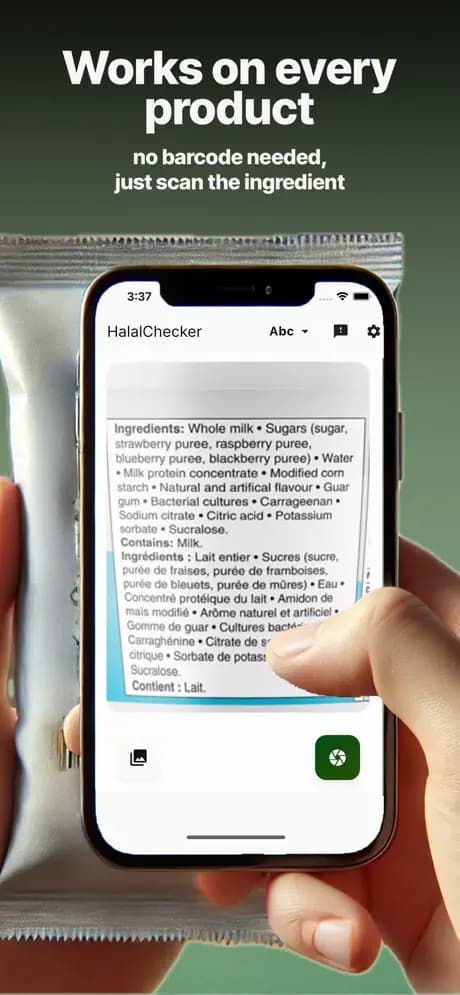
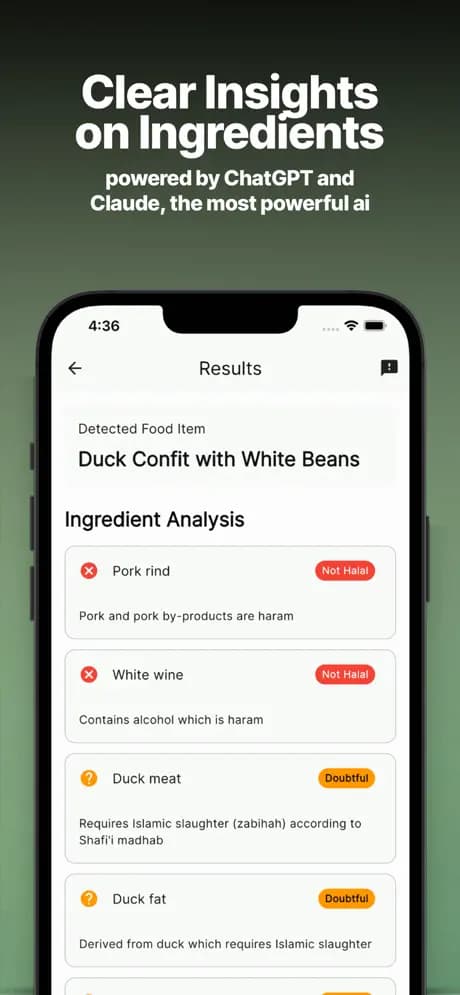
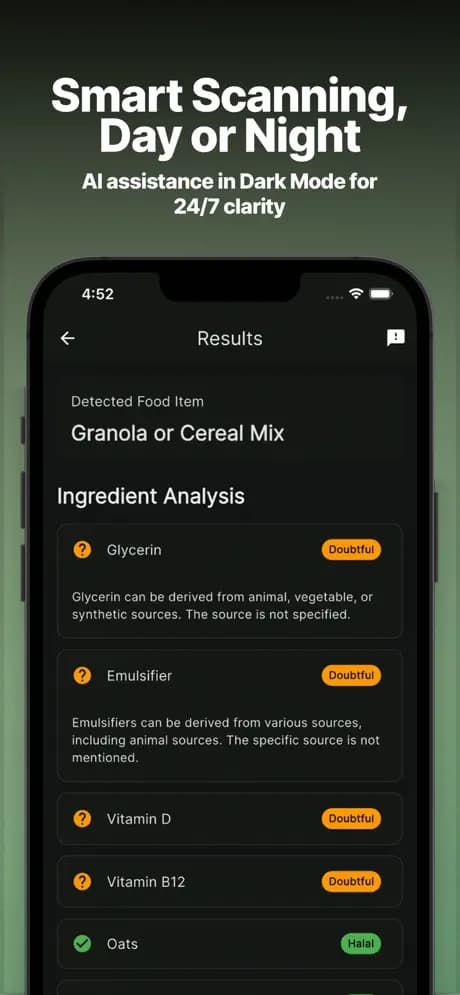
AI ingredient scanners like HalalChecker AI read Japanese kanji, hiragana, and katakana on product labels and flag:
- みりん, 本みりん, 味醂 (mirin variants) — flagged as haram.
- 料理酒 (cooking sake) — flagged as haram.
- 発酵調味料 (fermented seasoning) — flagged as mushbooh with a recommendation to verify alcohol content.
- みりん風調味料 (mirin-style seasoning) — flagged as mushbooh with a recommendation to verify the manufacturer's alcohol declaration.
The app explains each flag, lets the user select a madhab, and recommends halal alternatives where applicable. See our guide to AI halal food checking for a step-by-step walkthrough.
Frequently Asked Questions
Is mirin halal?
The mainstream Sunni position is that mirin is haram because it contains 10-14 percent alcohol from intentional fermentation, and adding it as an ingredient does not change its status even after cooking. A minority position from Muhammadiyah (Indonesia) permits mirin in cooking when the alcohol fully evaporates. Most major fatwa bodies (Darul Iftaa New York, IslamQA, MuslimSG, LPPOM MUI) treat it as haram.
Does cooking remove the alcohol from mirin?
Cooking reduces alcohol content but rarely eliminates it entirely. Studies cited by the US Department of Agriculture show that 5-25 percent of alcohol can remain even after extended simmering. Most schools rule that the intention to add alcohol as an ingredient makes the dish haram regardless of residual content.
Is mirin in sushi rice halal?
Standard Japanese sushi rice is seasoned with vinegar that often includes mirin or sake. Even at non-halal restaurants where this is not advertised, the rice itself typically contains alcohol-based seasoning. Halal-certified sushi restaurants in Tokyo, Osaka, and Kyoto use alcohol-free vinegar substitutes.
What does mirin look like on a Japanese label?
Look for みりん (mirin in hiragana), 本みりん (hon-mirin, true mirin), 味醂 (mirin in kanji), or 料理酒 (cooking sake). Also watch for 発酵調味料 (fermented seasoning) which can include alcohol-based mirin alternatives. みりん風調味料 (mirin-style seasoning) is often a non-alcoholic substitute but verify each product.
What are halal alternatives to mirin in cooking?
Common halal substitutes include: rice vinegar plus sugar (1 tablespoon vinegar + 1 teaspoon sugar replaces 1 tablespoon mirin); apple juice or white grape juice with a small amount of vinegar; or specially-labeled non-alcoholic mirin substitutes (みりん風調味料 with no alcohol). Halal-certified Japanese cooking sauces from brands like Yamasa Halal exist for export markets.
Is mirin used in restaurants outside Japan?
Yes, increasingly. Japanese restaurants, sushi bars, ramen shops, and teppanyaki places worldwide typically use mirin in sauces, glazes, and rice seasoning. Even Korean, Chinese, and pan-Asian fusion restaurants often use it. At any non-halal-certified Japanese restaurant, assume mirin is present in cooked dishes.
What is the difference between hon-mirin, mirin-fu, and shio-mirin?
Hon-mirin (本みりん) is real mirin with 14 percent alcohol. Mirin-fu (みりん風調味料) is a low-alcohol or non-alcohol mirin-style seasoning, often under 1 percent alcohol. Shio-mirin (塩みりん) is salt-added mirin classified as a seasoning rather than an alcoholic beverage in Japan, but still typically contains 1.5 percent alcohol. From a halal perspective, only confirmed alcohol-free mirin-fu is permissible.
Can a halal scanner app detect mirin in products?
Yes. AI scanner apps like HalalChecker AI read Japanese ingredient labels and flag mirin (みりん, 本みりん), cooking sake (料理酒), and other alcohol-based fermented seasonings. The app explains why each ingredient is flagged and recommends halal alternatives where applicable.
Bottom Line
Mirin is the most consequential single ingredient question for Muslims in Japan and at Japanese restaurants worldwide. The mainstream Sunni position across all four schools is haram. The Muhammadiyah Japan-context minority view is the one exception. In practice: assume cooked Japanese food at non-halal restaurants contains mirin, scan packaged Japanese sauces for みりん / 本みりん / 料理酒, swap to halal substitutes (rice vinegar + sugar, alcohol-free mirin-fu) at home, and use halal-certified Japanese restaurants when eating out.
Sources
- Darul Iftaa New York, "Mirin in sushi and other dishes" (askthemufti.us).
- Darul Iftaa Chicago, "Is Mirin in Sushi Halal for Hanafis?" (islamqa.org/hanafi).
- MuslimSG (Singapore), "Is mirin halal?" (muslim.sg/articles/is-mirin-halal).
- LPPOM MUI Indonesia, "Here's Why Sake And Mirin Are Haram" (halalmui.org).
- Muhammadiyah Majelis Tarjih, "Fatwa on Using Mirin in Cooking for Muslims in Japan" (en.muhammadiyah.or.id).
- IlmHub Q&A, Hanafi mirin ruling (qna.ilmhub.com).
- Food Diversity Today, "What Is Mirin And Is It Halal? A Clear Guide for Muslims in Japan" (fooddiversity.today).
- US Department of Agriculture, alcohol retention data in cooking studies.
- Japan Halal Association (JHA) certified product directory (jhalal.com).
🔍 Is Your Food Really Halal?
Don't guess - know for sure! Our free app scans food labels in seconds and tells you if ingredients are halal or haram. Perfect for shopping in non-Muslim countries. Join 100,000+ Muslims who trust HalalChecker AI for safer food choices.