Halal Food in Germany: 2026 Guide for Residents and Travelers
How Muslims in Germany find halal food in 2026. Halal Control eV, HFCE, EHZ certification, halal availability at REWE, Edeka, Aldi, Lidl, Kaufland, Penny, Turkish-heritage halal infrastructure, halal hubs in Berlin (Neukölln, Kreuzberg), Cologne (Kalk), Hamburg (Wilhelmsburg), and Stuttgart, German-language ingredient pitfalls, and how scanner apps cover the gaps.
Posted by
Related reading
Halal Food in the United States: 2026 Guide for Residents and Travelers
How Muslims in the US shop and eat halal in 2026. IFANCA, HMS, and IFANCC certification marks, halal availability at Walmart, Costco, Whole Foods, Trader Joe's, Kroger, HEB, Wegmans, ingredient pitfalls in mainstream packaged food, and city-by-city halal hubs in Dearborn, NYC, Houston, Chicago, the Bay Area, and DMV.
Halal Food in the UK: 2026 Guide for Residents and Travelers
How Muslims find halal food across the UK in 2026. The HMC vs HFA debate, halal ranges at Tesco, Sainsbury's, Asda, Morrisons, M&S, Waitrose, Aldi, and Lidl, hidden non-halal traps in sweets and ready meals, regional concentration in London, Birmingham, Leicester, Manchester, and Bradford, and which scanner apps work best in the UK.
Halal Food in Canada: 2026 Guide for Residents and Travelers
How Muslims in Canada find halal food in 2026. HMA, ISNA Canada, and IFANCC certification, halal availability at Loblaws, Sobeys, Metro, Walmart Canada, Costco, and No Frills, GTA halal hubs, Quebec considerations, and which scanner apps work for Canadian barcodes and ingredient lists.
Germany is one of the easier European countries for halal shopping in 2026 thanks to a long-established Turkish-heritage halal infrastructure. Roughly 5.5 million Muslims live in Germany, mostly Turkish, Kurdish, Arab, and Bosnian heritage, and the supply chain for halal meat, baked goods, and groceries is dense in major cities. Halal Control eV, HFCE, and EHZ are the main domestic certifiers. Mainstream supermarket chains (REWE, Edeka, Aldi, Lidl, Kaufland) are not halal-certified at the chain level, but Turkish-heritage neighborhoods in Berlin, Cologne, Hamburg, and Stuttgart host substantial independent halal grocers and butchers.
German packaged-food labels are detailed by EU regulation, which makes ingredient-level checking practical, but the language barrier and the prevalence of pork-derived ingredients (Schweinefleisch, Schweinegelatine, Schweineschmalz) trip up Muslim shoppers and travelers. This guide covers the certifier marks to look for, the chains to shop at, the German label words to watch for, and the metro-by-metro halal scene.
Halal Certification Bodies in Germany
- Halal Control eV. The most widely recognized German halal certifier. Mark appears on dairy, processed food, baked goods, and packaged meat. Recognized by JAKIM-equivalent bodies for trade purposes.
- HFCE (Halal Food Council Europe). European certifier active in Germany; certifies multiple processed-food brands.
- EHZ (European Halal Authority). Lower-volume but reputable certifier covering meat and packaged goods.
- Mosque-issued marks for individual butchers and restaurants, common in Turkish-heritage neighborhoods.
- Turkish certifiers (TSE, GIMDES). Common on imported Turkish products available in Germany.
Halal at Major German Supermarkets
| Chain | Halal-Certified Meat | Halal Packaged Goods | Best For |
|---|---|---|---|
| REWE | Limited (occasional packaged halal items) | Selected Halal Control-marked brands | Mainstream chain in Muslim-population areas |
| Edeka | Limited; region-dependent | Some certified items | Larger Edeka E-Centers in major cities |
| Kaufland | Selected halal frozen items | Selected certified packaged goods | Suburban large-format shopping |
| Lidl | No halal-certified fresh meat | Vegetarian-by-default items | Cheap basics; verify each label |
| Aldi (Süd / Nord) | No halal-certified fresh meat | Vegetarian-by-default items | Cheap basics; verify each label |
| Penny / Netto | Limited halal frozen offerings | Some certified items in Muslim-population areas | Low-cost basics |
| Independent Turkish / Arab grocers | Yes (default halal) | Wide imports, certified brands | Best meat and overall halal coverage |
| Akin Market, Kanaan Market, Yakın Market | Yes | Yes | One-stop halal shopping in Berlin and Cologne |
German Label Words to Watch For
- Schwein / Schweinefleisch. Pork. Hard avoid.
- Schweineschmalz / Speck. Pork lard / bacon fat. Hard avoid.
- Schweinegelatine / Gelatine. Default pork-derived gelatin in Germany unless specified otherwise.
- Wein / Branntwein / Weinessig. Wine, brandy, wine vinegar. Most schools accept fully fermented vinegar; cooking wine and brandy are haram.
- Aroma mit Alkohol. Flavoring with alcohol; treat as mushbooh.
- Lab / Lab tierischen Ursprungs. Rennet / animal rennet, common in German cheese.
- E471 (Mono- und Diglyceride). Common in commercial bread; source rarely declared.
- E120 (Echtes Karmin). Insect-derived red dye; rulings differ by madhab.
- Halal-zertifiziert. The mark to look for; cross-check the certifier's logo.
Halal Hubs by German City
- Berlin. Neukölln (especially Sonnenallee, the "Arab Street" corridor), Kreuzberg, Wedding, and Moabit have dense halal infrastructure. Hundreds of Doner Kebab and Turkish restaurants, multiple Akin Market and Yakın Market locations, and the Sehitlik Mosque neighborhood near Tempelhof.
- Cologne (Köln) and Bonn. Kalk, Mülheim, and Ehrenfeld have deep Turkish-heritage halal scenes. Köln Central Mosque is at the heart of the community.
- Hamburg. Wilhelmsburg, St. Georg, and Steindamm cluster halal restaurants and grocers.
- Stuttgart. Bad Cannstatt and the city center have multiple Turkish halal grocers and butchers.
- Frankfurt. Bahnhofsviertel and the northeastern suburbs have a mature halal scene.
- Munich. Smaller Muslim population than the Rhine cities, but Hauptbahnhof and the western suburbs host the main halal cluster.
- Düsseldorf, Nuremberg, Mannheim, Bremen, Hannover. Mid-sized halal scenes; one or two dominant Turkish grocer chains plus a dozen halal restaurants per city.
Halal Restaurants and Doner in Germany
Doner Kebab is effectively a German national dish (Berlin alone has more Doner shops than Istanbul) and most are halal because the supply chain is Turkish-heritage. That said:
- Default-halal Doner shops. Most independent shops in Turkish-heritage neighborhoods are halal but not all carry visible certifier marks. Look for an Arabic or Turkish "HELAL / حلال" sign in the window.
- Halal-certified chains. DönerKING and a handful of regional chains carry Halal Control eV certification. Mustafa's Gemüsekebap (Berlin) is widely accepted as halal but not formally certified.
- Mainstream chains. Burger King, McDonald's, KFC, and Subway in Germany are not halal at the chain level. A small number of franchisees in Berlin and the Ruhr have served halal chicken at specific outlets in the past.
- Other cuisines. Lebanese, Syrian, Yemeni, Pakistani, and Afghan restaurants in Berlin's Neukölln are largely halal by default. Verify the storefront.
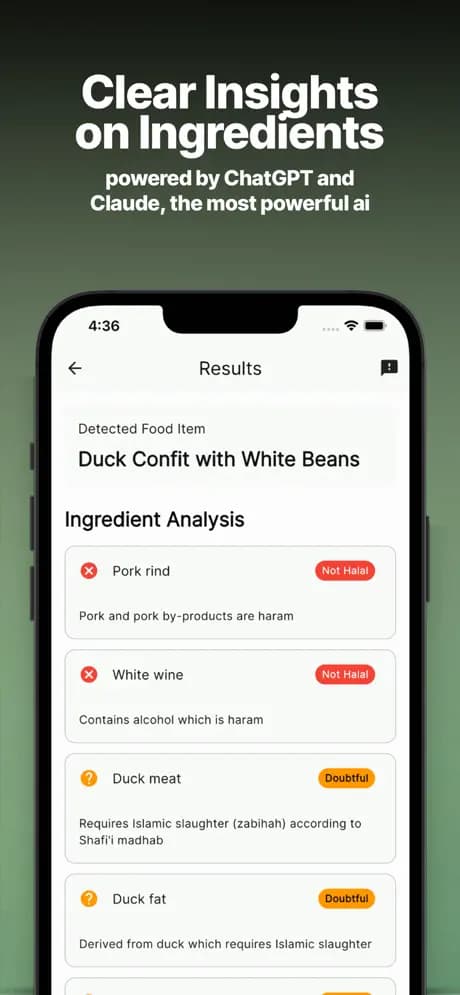
How a Scanner App Helps in Germany
German packaged-food labels are detailed but in German, and mainstream-chain halal certification is sparse. An AI ingredient scanner is most useful for:
- REWE, Edeka, Lidl, Aldi, and Kaufland private-label items that have no halal certification mark.
- Reading German ingredient lists fast (Schwein, Schweineschmalz, Schweinegelatine) without translating each word manually.
- Imported European products with French, Italian, or Spanish ingredient lists.
- Confectionery aisle (German Haribo, gummies, marshmallows) where the gelatin question is the main question.
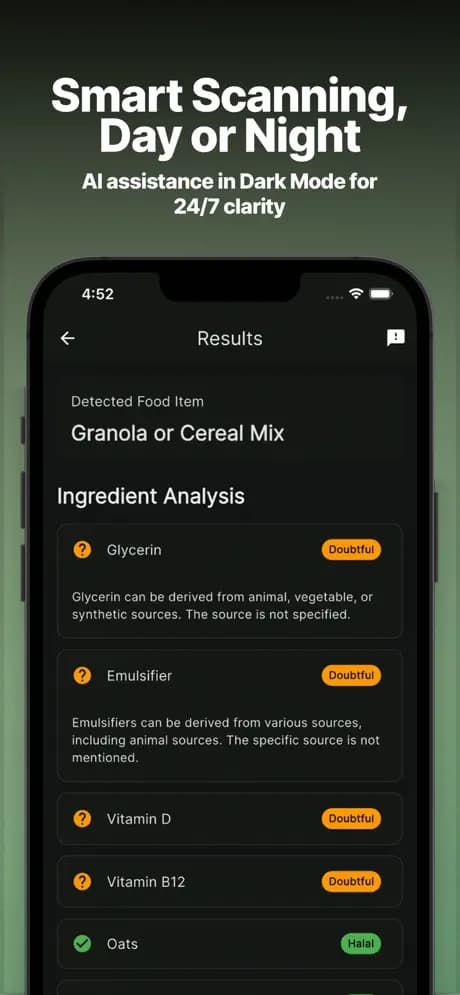
HalalChecker AI reads German ingredient labels. See our best halal scanner apps roundup for app comparisons.
Frequently Asked Questions
Is German Schweinefleisch halal?
No. Schweinefleisch is the German word for pork and is haram in all Sunni schools. Watch for Schweinefleisch, Schweineschmalz (pork lard), and Schweinegelatine (pork gelatin) on German labels.
Is meat at REWE and Edeka halal?
REWE and Edeka are not halal-certified at the chain level. Stores in heavily Turkish-heritage neighborhoods of Berlin, Cologne, and Hamburg occasionally stock halal-certified packaged meat from suppliers like Mevsim or KORÖZ, but the regular meat counter is not halal. Independent Turkish butchers in those neighborhoods are the standard source.
Are Lidl and Aldi Germany halal?
Lidl and Aldi do not stock halal-certified fresh meat in Germany. Both carry vegetarian, dairy, and snack lines that are halal-friendly by ingredients. Verify each label for gelatin, alcohol-based flavorings, or animal rennet.
What is Halal Control eV?
Halal Control eV is a German halal certification body recognized by GCC and OIC standards. Its mark appears on dairy, processed food, and meat products distributed in German supermarkets and across the EU. Other domestic certifiers include HFCE (Halal Food Council Europe) and EHZ (European Halal Authority).
Is Haribo halal in Germany?
Standard Haribo manufactured in Germany uses pork-derived gelatin and is not halal. Haribo's Turkish production line uses beef gelatin and is halal-certified, available through halal grocers in heavily Turkish-heritage neighborhoods. See our Haribo halal guide for the full breakdown.
What is the difference between Doner Kebab halal status across Germany?
Most German Doner Kebab shops are halal because the cuisine and its supply chain are dominated by Turkish-heritage Muslims, but not all are halal-certified. The mark to look for is HCV, Halal Control eV, or a sign in the window confirming halal sourcing. In tourist neighborhoods of Berlin, the chain DönerKING and Mustafa's Gemüsekebap are widely accepted as halal.
Where can I find halal food when traveling to smaller German cities?
In smaller cities like Leipzig, Dresden, or Bremen, halal availability is limited to Doner shops and a handful of grocers in immigrant neighborhoods. Online halal mail-order from Berlin or Cologne is common; an AI ingredient scanner is the practical fallback at any mainstream supermarket.
What German label words flag non-halal ingredients?
Schwein (pork), Schweinefleisch, Schweineschmalz (lard), Speck (bacon fat), Schweinegelatine (pork gelatin), Gelatine (default pork-derived in Germany), Wein (wine), Branntwein (brandy), Aroma mit Alkohol (alcohol-based flavoring), and Lab tierischen Ursprungs (animal rennet) are the most common non-halal indicators.
Bottom Line
Germany is one of Europe's most halal-friendly countries in 2026 thanks to a deep Turkish-heritage supply chain. Anchor on independent halal grocers in Berlin Neukölln, Cologne Kalk, Hamburg Wilhelmsburg, and Stuttgart Bad Cannstatt for meat. Use the Halal Control eV mark to identify halal packaged goods at REWE, Edeka, and Kaufland. For the much larger pool of unmarked German packaged food, a scanner app that reads German ingredient lists is the practical answer.
Sources
- Halal Control eV (halalcontrol.eu), official certifier directory.
- HFCE (Halal Food Council Europe) and EHZ certifier listings.
- Bundeszentrale für politische Bildung, German Muslim population estimates.
- REWE, Edeka, Aldi, Lidl, Kaufland store finders for Muslim-population branches.
- VisitBerlin Muslim travelers guide for halal restaurants and prayer rooms.
- Zabihah.com, HalalTrip, and Amaliah crowd-sourced German halal directories.
🔍 Is Your Food Really Halal?
Don't guess - know for sure! Our free app scans food labels in seconds and tells you if ingredients are halal or haram. Perfect for shopping in non-Muslim countries. Join 100,000+ Muslims who trust HalalChecker AI for safer food choices.