Halal Food in Australia: 2026 Guide for Residents and Travelers
How Muslims in Australia find halal food in 2026. AFIC, ICCV, and IBC certification, halal availability at Coles, Woolworths, Aldi Australia, IGA, and Costco, hidden ingredients in Australian packaged food, halal hubs in Sydney (Lakemba), Melbourne (Brunswick / Dandenong), Perth (Mirrabooka), and Brisbane (West End), and how AI scanner apps cover the gaps.
Posted by
Related reading
Halal Food in the United States: 2026 Guide for Residents and Travelers
How Muslims in the US shop and eat halal in 2026. IFANCA, HMS, and IFANCC certification marks, halal availability at Walmart, Costco, Whole Foods, Trader Joe's, Kroger, HEB, Wegmans, ingredient pitfalls in mainstream packaged food, and city-by-city halal hubs in Dearborn, NYC, Houston, Chicago, the Bay Area, and DMV.
Halal Food in the UK: 2026 Guide for Residents and Travelers
How Muslims find halal food across the UK in 2026. The HMC vs HFA debate, halal ranges at Tesco, Sainsbury's, Asda, Morrisons, M&S, Waitrose, Aldi, and Lidl, hidden non-halal traps in sweets and ready meals, regional concentration in London, Birmingham, Leicester, Manchester, and Bradford, and which scanner apps work best in the UK.
Halal Food in Canada: 2026 Guide for Residents and Travelers
How Muslims in Canada find halal food in 2026. HMA, ISNA Canada, and IFANCC certification, halal availability at Loblaws, Sobeys, Metro, Walmart Canada, Costco, and No Frills, GTA halal hubs, Quebec considerations, and which scanner apps work for Canadian barcodes and ingredient lists.
Australia is a workable halal market for residents and travelers in 2026. The country is one of the world's largest exporters of halal-certified beef and lamb, but most of that production goes overseas: domestic supermarket meat is not halal-certified by default. Coles and Woolworths carry halal-certified meat and packaged goods in selected stores in Sydney, Melbourne, Perth, and Brisbane. AFIC, ICCV, and IBC are the main domestic certifiers. For everything that does not carry a halal mark, an ingredient scanner is the practical fallback.
Australia has roughly 813,000 Muslims (Australian Bureau of Statistics, 2021 Census), with the largest concentrations in Western Sydney (Lakemba, Auburn, Bankstown), inner and northern Melbourne (Brunswick, Coburg, Dandenong), Perth (Mirrabooka, Thornlie), and inner Brisbane (West End, Rocklea). The halal scene is mature in those metros and limited outside them. This guide covers what to buy, where to shop, and how to read Australian packaged-food labels.
Halal Certification Bodies in Australia
- AFIC (Australian Federation of Islamic Councils). The most widely recognized national certifier. The AFIC Crescent mark appears on dairy, snacks, frozen meals, and selected poultry brands at Coles and Woolworths.
- ICCV (Islamic Council of Victoria). Major certifier for Victorian and inter-state meat and packaged goods.
- IBC (Islamic Business Council). Active in Sydney and across export-meat certification.
- SICHMA, MWL, Halal Australia. Smaller certifiers, more often seen on imported or specialty items.
- State and mosque-issued marks for individual butchers and restaurants.
Australian halal certification is recognized internationally and is part of why so much Australian beef is exported to Muslim-majority countries. The same rigour applies domestically, but the certified-product footprint at mainstream chains is smaller.
Halal Availability at Major Australian Chains
| Chain | Halal-Certified Meat | Halal Packaged Goods | Best For |
|---|---|---|---|
| Woolworths | Yes (AFIC / ICCV) in selected metro stores | Selected halal-certified packaged items | Most consistent national chain coverage |
| Coles | Yes (AFIC / ICCV) in selected metro stores | Selected halal-certified packaged items | Sydney, Melbourne, Perth shoppers |
| IGA | Region-dependent halal meat sections | Limited halal packaged items | Suburban shoppers in Muslim-population areas |
| Costco Australia | Limited halal meat in selected warehouses | Some certified packaged items | Bulk shopping where stocked |
| Aldi Australia | No halal-certified fresh meat | Vegetarian-by-default basics | Cheap basics; verify each ingredient list |
| Independent halal butchers and grocers | Yes (default zabihah) | Wide imports and certified brands | Best meat and overall halal range |
| Lakemba Halal, Auburn, Brunswick halal grocers | Yes | Yes (extensive) | One-stop halal supermarket experience |
In Lakemba (Sydney), Brunswick (Melbourne), Mirrabooka (Perth), and West End (Brisbane), independent grocers carry the same range a Muslim household would expect at home. They are the strongest source for HMC-style hand-slaughter zabihah meat in Australia.
Common Ingredient Pitfalls in Australian Packaged Food
- Pork-derived gelatin in confectionery. Standard Allen's gummies, marshmallows, and many private-label candies use pork gelatin. See our Haribo halal guide for the country-specific breakdown.
- Animal rennet in cheese. Many Coles and Woolworths private-label cheddars, mozzarellas, and parmesans use animal rennet of unspecified source. Cheeses labelled "suitable for vegetarians" are typically halal.
- Alcohol-based vanilla extract. Standard in commercial baked goods and ice cream. Schools differ on cooked alcohol; many practising Muslims avoid it.
- Mono and diglycerides (E471) in bread. Common in Tip Top, Helga's, Wonder, and Coles / Woolworths private-label loaves. Source rarely declared, treat as mushbooh.
- Wine vinegar in dressings and ready meals. Coles Finest and Woolworths Macro lines often include red-wine or sherry vinegar.
- L-cysteine in commercial bagels and pizza dough. Sometimes derived from human hair or duck feathers.
- Carmine (E120) in red drinks and yogurts. Insect-derived; rulings vary by madhab.
Halal Hubs by Australian Metro
- Sydney. Lakemba is the heart of the halal scene. Auburn, Bankstown, Greenacre, and Punchbowl have substantial halal grocery and restaurant clusters. Western Sydney also includes Liverpool, Granville, and Parramatta.
- Melbourne. Brunswick, Coburg, and Sydney Road run a default-halal cafe and restaurant strip. Dandenong has Afghan, Lebanese, Pakistani, and Bosnian halal options. Broadmeadows and Roxburgh Park are growing.
- Perth. Mirrabooka, Thornlie, and Beechboro are the main Muslim-population suburbs with halal grocers and restaurants.
- Brisbane. West End, Holland Park, and Rocklea anchor the halal scene. Logan and the Gold Coast have growing options.
- Adelaide and Canberra. Smaller halal scenes; one or two reliable halal grocers each, plus a handful of halal-certified restaurants.
- Hobart, Darwin, and rural towns. Limited; most residents combine occasional halal-grocer trips, online mail-order, and ingredient-scanning at mainstream chains.
Halal Restaurants in Australia
- Independent halal restaurants dominate the scene. Lebanese, Turkish, Pakistani, Afghan, Indonesian, Malaysian, Yemeni, Somali, and Bosnian cuisines are typically halal by default at family-run restaurants in halal-clustered suburbs.
- National chains. McDonald's Australia, Hungry Jack's, and KFC Australia are not halal-certified at the chain level. A small number of individual franchisees have offered halal chicken at specific outlets; verify each location.
- Halal-certified Australian chains include Charcoal Charlie's (chicken) in selected stores and a growing list of regional kebab and chicken chains. Zabihah.com and HalalSquare cover the current list.
- Subway Australia. Not halal-certified at the chain level. Vegetarian options are halal-friendly by ingredients but the chain shares production with non-halal meat.
How a Scanner App Helps in Australia
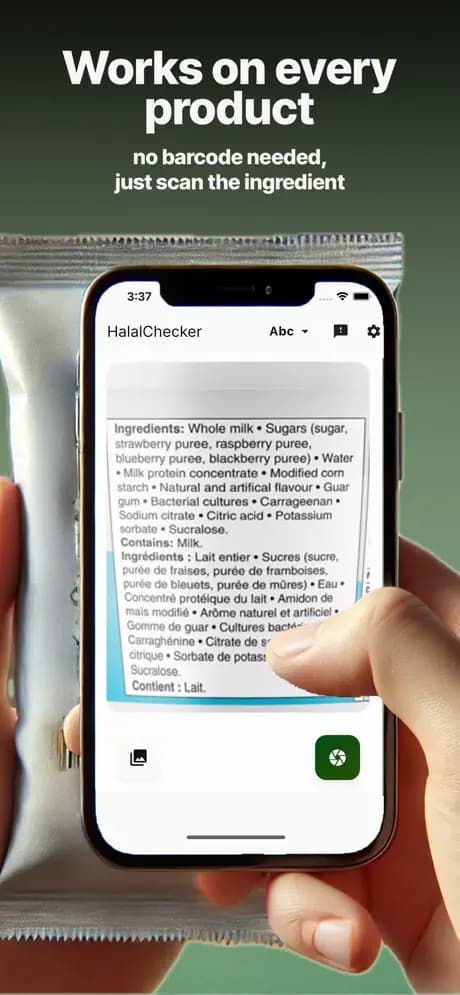
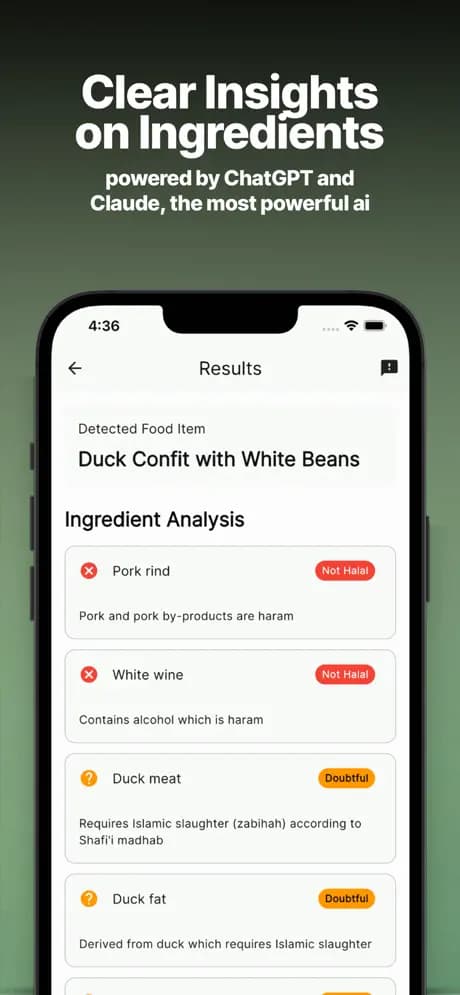
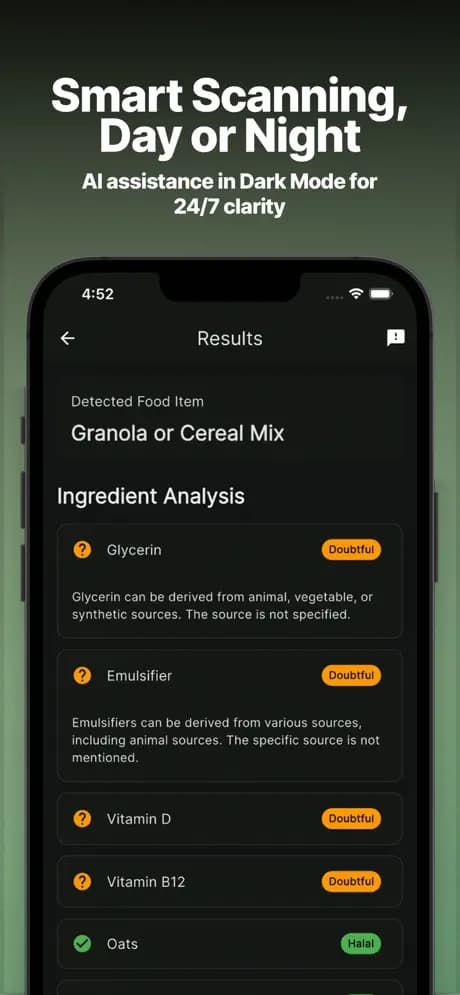
Australian packaged food is dense with E-codes, animal rennets, and alcohol-based flavorings, and the certification footprint at mainstream chains is smaller than the UK or Singapore. An AI ingredient scanner is most useful for:
- Coles and Woolworths private-label items (Coles brand, Woolworths Essentials, Macro) where halal certification is rare.
- Aldi Australia private-label snacks, dairy, and frozen items that move quickly and rarely show up in community halal databases.
- Imported European and Asian products where the ingredient list is in another language.
- Tim Tams, Allen's, Cadbury, and other Australian confectionery where the gelatin question is the main question.
See our best halal scanner apps roundup for app comparisons that cover Australian use cases.
Frequently Asked Questions
Is meat at Coles and Woolworths halal in Australia?
Coles and Woolworths carry halal-certified meat in selected stores in Sydney, Melbourne, Perth, and Brisbane areas with significant Muslim populations. Look for the AFIC or ICCV mark on the package. The regular meat counter is not halal by default.
Is most Australian beef halal?
Australia is one of the world's largest exporters of halal-certified beef and lamb, but most of that production is for export to Muslim-majority markets. Domestic supermarket meat is not halal unless specifically marked. Independent halal butchers in major Muslim-population suburbs are the most reliable source.
Is Aldi Australia halal?
Aldi Australia does not stock halal-certified fresh meat. Many of its private-label vegetarian, dairy, and snack lines are halal-friendly by ingredients, but always verify each label for gelatin, animal rennet, or alcohol-based flavorings.
What is AFIC certification?
AFIC (Australian Federation of Islamic Councils) is the most widely recognized halal certifier in Australia. The AFIC Crescent mark appears on dairy, snacks, processed food, and some chicken brands. ICCV (Islamic Council of Victoria) and IBC (Islamic Business Council) also issue marks accepted at major retailers.
Are Australian Tim Tams halal?
Standard Tim Tams sold in Australia do not carry a halal certification mark. Ingredients are typically halal-friendly (no gelatin in the classic milk-chocolate variety), but the chain shares production facilities with non-halal items. Tim Tams sold in Malaysia and Indonesia are halal-certified by JAKIM and MUI but those are different SKUs.
Is Hungry Jack's halal in Australia?
Hungry Jack's is not a halal-certified chain. A small number of franchisees in Sydney and Melbourne have served halal chicken at specific outlets in the past, but availability shifts. Always verify with the specific store.
How do I find halal restaurants in Sydney or Melbourne?
Zabihah.com and HalalSquare are the most current crowd-sourced halal restaurant directories for Australia. Reddit communities (r/sydney, r/melbourne) often share active halal-restaurant lists. Suburbs to start with: Lakemba and Auburn in Sydney, Brunswick and Dandenong in Melbourne, Mirrabooka in Perth, and West End in Brisbane.
What ingredients should I watch for in Australian packaged food?
Pork-derived gelatin in confectionery, animal rennet in cheese (especially private-label cheddar and parmesan), alcohol-based vanilla extract in baked goods, mono and diglycerides (E471) in commercial bread, and wine vinegar in salad dressings are the most common traps. An ingredient-scanner app catches these quickly.
Bottom Line
Australia is workable in major metros and harder in smaller cities and rural areas. Anchor on independent halal grocers in Lakemba, Auburn, Brunswick, Dandenong, Mirrabooka, and West End for meat. Use AFIC, ICCV, or IBC marks to identify halal packaged goods at Coles, Woolworths, and IGA. For the much larger pool of unmarked Australian packaged food, a scanner app is the practical answer.
Sources
- AFIC (Australian Federation of Islamic Councils), official certifier directory.
- ICCV (Islamic Council of Victoria), certified establishment listings.
- Australian Bureau of Statistics, 2021 Census religion data.
- Coles, Woolworths, IGA, and Costco Australia store finders for halal-stocking branches.
- Meat & Livestock Australia, halal beef export data.
- Zabihah.com and HalalSquare crowd-sourced Australian halal directories.
- SANHA and MHCT E-number reference tables for ingredient classifications cited above.
🔍 Is Your Food Really Halal?
Don't guess - know for sure! Our free app scans food labels in seconds and tells you if ingredients are halal or haram. Perfect for shopping in non-Muslim countries. Join 100,000+ Muslims who trust HalalChecker AI for safer food choices.